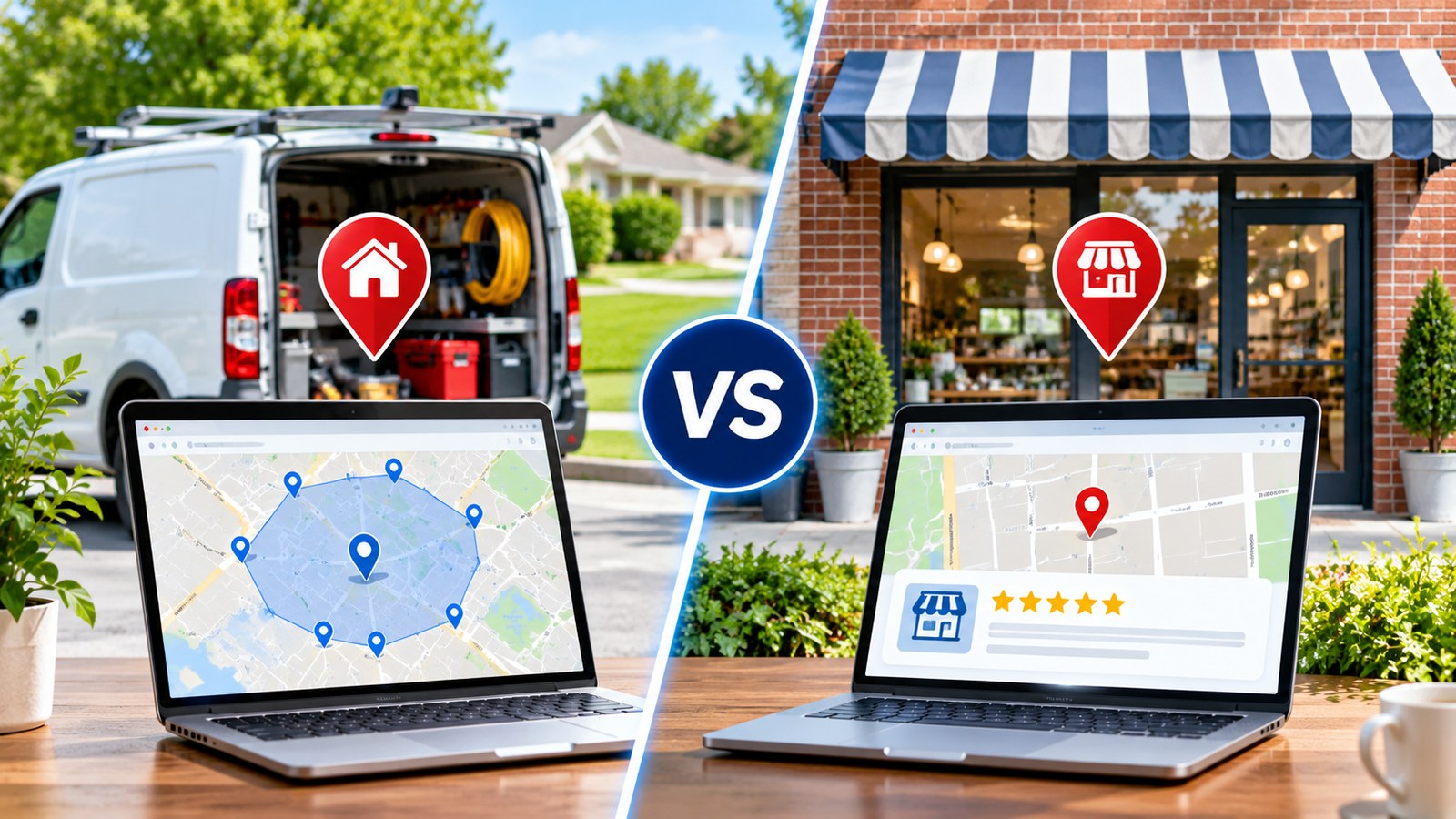
Not every local business operates from a traditional shop or office. Some businesses welcome customers at a physical location, while others travel directly to customers to provide services. This difference affects how businesses should approach local search visibility, Google Business Profile setup, and their overall local marketing strategy.
A plumber working from a home office, a mobile car detailing company, and a cleaning service operate differently from a restaurant, dental clinic, or retail store. Although all of them depend on local customers, their business models require different approaches to local visibility.
This is where the distinction between a Service Area Business (SAB) and a storefront becomes important. Choosing the correct business type helps companies represent themselves accurately, reach relevant local audiences, and avoid problems caused by misleading business information.
So, which model has the advantage in local SEO? The answer depends on the business category, customer behaviour, physical location, competition, and the way services are delivered.
1. What Is a Service Area Business?
A Service Area Business is a company that travels to customers or delivers products directly to them instead of serving customers at its own business address.
These businesses may operate from a home office, central workspace, garage, or other base that customers do not normally visit. Their public-facing business information focuses on the geographical areas they serve rather than displaying a customer-facing storefront address.
Common examples include:
- Plumbers and electricians.
- House cleaning services.
- Mobile car detailing businesses.
- Landscaping and gardening companies.
- Pest control providers.
- Roofing and repair contractors.
- Mobile pet grooming services.
- Home maintenance professionals.
- On-site computer repair services.
For example, a plumbing company based in one town may visit customers across several nearby towns. Customers contact the business and arrange for a plumber to visit their property. They do not need to travel to the company’s office.
Under Google Business Profile guidelines, a business that travels to customers and does not serve them at its business address should generally hide its address and specify its actual service areas.
2. What Is a Storefront Business?
A storefront business operates from a physical location where customers can visit during the business’s stated operating hours. The location is an important part of the customer experience.
Customers may visit the premises to purchase products, receive professional services, attend appointments, or interact with staff.
Common examples include:
- Restaurants and cafes.
- Retail stores and supermarkets.
- Dental clinics and medical practices.
- Salons and beauty centres.
- Gyms and fitness studios.
- Automobile dealerships.
- Repair shops with customer-facing premises.
- Educational and training centres.
- Hotels and hospitality businesses.
For example, a dental clinic receives patients at its registered business location. People search for a nearby dentist, compare available clinics, check reviews, and travel to the selected premises.
A qualifying storefront should accurately represent its real-world location, maintain appropriate permanent signage, and be staffed to receive customers during its stated hours.
3. Service Area Business vs. Storefront: Key Differences
Both business types can qualify for a Google Business Profile when they meet the relevant eligibility requirements. However, their profiles represent different customer experiences.
Business location
A storefront displays its eligible customer-facing address. A service-area business hides its address when customers are not served at that location.
Customer interaction
Storefront businesses expect customers to visit their premises. Service-area businesses travel to customers or deliver directly to them.
Local targeting
A storefront is associated with a physical customer location. A service-area business identifies the cities, postal codes, or other areas where it genuinely provides services.
Business profile information
Storefront profiles show the eligible address and operating details. Service-area profiles identify the areas served without publicly displaying a non-customer-facing address.
Customer decision-making
Storefront customers may prioritise distance, directions, parking, premises, and opening hours. Service-area customers may place greater importance on availability, response time, service coverage, pricing, and the ability to visit their property.
Website content
Storefront websites often emphasise the physical location, facilities, directions, and local services. Service-area websites may need to explain coverage areas, service availability, appointment processes, and the locations where teams operate.
4. Which Business Type Has an Advantage in Local SEO?
There is no universal winner between a service-area business and a storefront. Neither profile type automatically receives better local rankings simply because of its classification.
Google explains local results through three broad factors: relevance, distance, and prominence. These factors help determine which businesses are appropriate for a particular local search.
Relevance
Relevance refers to how closely a business matches what someone is searching for. A properly categorised plumbing business may be relevant to a search for emergency plumbing, while a dental clinic may be relevant to a search for dental appointments.
Distance
Distance concerns how far a business is from the searcher or the location specified in the search. A nearby eligible storefront may be well positioned for a location-based query, while a service-area business may be considered according to its real-world base and the search context.
Prominence
Prominence relates to how well known a business is. Information such as reviews, links, and other online references can contribute to Google’s understanding of a business’s visibility and reputation.
The practical lesson is that businesses should focus on relevance, accurate location information, service quality, and reputation instead of choosing a profile type based on assumptions about rankings.
5. Which Categories Benefit More From a Service Area Business Strategy?
Some industries naturally operate through customer visits rather than customer-facing premises. These categories can benefit from a service-area approach when it accurately reflects how the business works.
Plumbing services
Plumbers usually travel to residential and commercial properties to inspect and repair plumbing systems. Customers generally search for a plumber who can serve their location rather than visit a plumbing office.
A service-area profile can communicate the areas covered and help customers understand where the company provides assistance.
Cleaning companies
Residential and commercial cleaning companies perform work at customers’ properties. Their local marketing can focus on the neighbourhoods and towns where cleaning teams regularly operate.
Electricians
Electricians often visit properties to handle wiring, installation, maintenance, and repair work. Clear service descriptions and accurate coverage information can help potential customers understand the business.
Pest control services
Pest control businesses usually inspect and treat customer properties. Their service-area strategy can communicate the locations where technicians are available.
Mobile car detailing
Mobile detailing companies visit customers at their homes, offices, or other agreed locations. Their website should clearly explain mobile service availability and geographical coverage.
Landscaping and gardening
These businesses work at customer properties and often cover several nearby communities. Local content can explain the types of landscaping work offered and the areas where teams operate.
For these industries, a service-area profile is usually more accurate than displaying an office that customers cannot actually visit.
6. Which Categories Benefit More From a Storefront Strategy?
Businesses that depend on customer visits generally need an eligible storefront presence. Their location is a central part of how customers discover and evaluate the business.
Restaurants and cafes
People frequently search for restaurants based on their current location, cuisine, atmosphere, opening hours, and customer reviews. A real customer-facing address helps them find the premises and plan a visit.
Retail stores
Retail customers often want to see products, compare options, check availability, and make purchases in person. Storefront information helps them locate the shop.
Dental and medical clinics
Patients generally need to visit a clinic for appointments and treatment. Accurate address information, operating hours, professional details, and contact information are important.
Beauty salons
Customers visit salons for haircuts, treatments, grooming, and beauty services. A storefront profile can help potential customers discover the premises and understand available services.
Gyms and fitness studios
People often search for nearby fitness facilities where they can attend classes, use equipment, or meet trainers. A physical location is an essential part of the business offering.
7. What About Businesses That Operate Both Ways?
Not every business fits neatly into one category. Some businesses receive customers at a physical location and also travel to customer properties.
These are commonly known as hybrid businesses.
For example:
- An automobile repair shop that provides garage repairs and roadside assistance.
- A restaurant that serves dine-in customers and delivers food.
- A garden centre that welcomes visitors and delivers products.
- A repair company that receives equipment at its workshop and also provides on-site services.
- A professional service provider that receives customers at its office and conducts property visits.
Eligible hybrid businesses can display their customer-facing address and specify the areas they serve. The location must genuinely receive customers during its stated hours and meet the applicable storefront requirements.
This is an important distinction because businesses should not hide a genuine customer-facing location simply because they also travel to customers. Similarly, they should not display an address where customers cannot actually receive service.
8. How to Optimise a Service Area Business for Local Search
A service-area business should build its local presence around the services it provides and the locations it genuinely serves.
Set up an accurate Google Business Profile
Use the real business name, the most appropriate primary category, accurate contact details, operating hours, and a genuine business location as required for verification. If customers are not served at the base, hide the address.
Choose realistic service areas
List the cities, postal codes, or other areas where the business regularly provides services. Google allows up to 20 service areas on a profile. The overall coverage should generally remain within about two hours of driving time from the business base, although some businesses may qualify for larger areas.
Do not add distant towns simply to make the business appear relevant across a wider geographical region.
Create useful service pages
The website should explain each major service clearly. For example, an electrical contractor may have separate pages for electrical repairs, installations, safety inspections, and emergency services.
Develop genuine location information
If the company regularly serves multiple towns, it can create useful location pages explaining available services, coverage details, and local customer requirements.
Each page should offer meaningful information rather than simply replacing one city name with another across dozens of nearly identical pages.
Build a strong review profile
Encourage genuine customers to share their experiences. Reviews that accurately describe the service received can help prospective customers understand the quality of the business.
Use real project photographs
Images of completed work, equipment, staff, and service activities can help customers understand what the company offers. Use genuine images and avoid presenting stock photographs as actual company projects.
9. How to Optimise a Storefront Business for Local Search
Storefront businesses should make their physical location and customer experience easy to understand.
Maintain accurate address information
Use the real customer-facing address and ensure that the location details match the business’s real-world presence.
Maintain permanent signage
Businesses displaying their address on Google should maintain permanent fixed signage showing their business name at the location.
Keep operating hours updated
Accurate opening hours help customers plan visits and avoid arriving when the business is closed. Update holiday hours and temporary closures when necessary.
Add useful photographs
Upload genuine exterior and interior photographs, products, facilities, staff, and other relevant images. These help potential customers recognise the premises and understand what to expect.
Use relevant categories
Choose the most specific categories that accurately describe the business. Avoid adding unrelated categories simply to appear in additional searches.
Build local customer relationships
Encourage genuine customer feedback, respond professionally to reviews, and maintain consistent business information across relevant platforms.
10. Can a Service Area Business Rank in Multiple Cities?
A service-area business can identify the cities and locations where it provides services. However, listing a city in the service-area field does not guarantee visibility in that city’s local search results.
Google’s local results consider relevance, distance, and prominence. A business based in one location may find it more difficult to appear prominently for searches made much farther away, even when it genuinely serves that area.
For example, a plumbing company based in City A may serve customers in City B. It can accurately list City B as part of its service area, but that does not mean it will automatically rank alongside established plumbers physically located in City B.
To improve its chances of attracting customers across its actual coverage area, the company can:
- Create useful service pages for important coverage locations.
- Publish genuine local project examples where appropriate.
- Maintain accurate business details across relevant platforms.
- Build a strong reputation through genuine customer experiences.
- Develop relevant local partnerships and business relationships.
- Ensure that the website clearly explains where services are available.
These activities can support local discovery, but they do not guarantee rankings in every location.
11. Should a Service Area Business Create Multiple Google Business Profiles?
Creating multiple profiles for individual towns is not a legitimate shortcut for increasing local visibility.
Google generally allows a service-area business to maintain one profile for the central business location and its designated service area.
Separate profiles may be appropriate when a business has genuinely distinct operating locations, with separate service areas and separate staff at each location, and each location meets the applicable eligibility requirements.
For example, a plumbing company with one operating base in City A and another genuine staffed base in City B may qualify for separate profiles if each location independently meets Google’s requirements.
However, using virtual offices, rented addresses without actual operations, or residential addresses presented as customer-facing branches can create policy problems and risk profile suspension.
The correct approach is to represent the actual business structure rather than create additional profiles solely to target more geographical keywords.
12. Common Local SEO Mistakes for Service Area and Storefront Businesses
Choosing a business type based on ranking assumptions
Some businesses choose a storefront profile because they assume showing an address will improve visibility. Others hide their address even when customers genuinely visit. Both decisions can misrepresent the business. Select the profile type based on the real customer experience.
Using a virtual office as a storefront
A rented mailing address or virtual office that does not operate as a genuine customer-facing location is not an eligible substitute for a storefront.
Adding too many service areas
Listing locations that the business does not genuinely serve can confuse customers and create inaccurate business information.
Creating duplicate profiles
Multiple profiles for the same operating location can cause confusion and violate profile guidelines.
Publishing thin city pages
Creating dozens of location pages with nearly identical text provides little value to visitors. Local pages should include useful and accurate information about the services offered in each area.
Ignoring reviews and customer feedback
Local visibility is only one part of customer acquisition. Businesses should also focus on service quality, genuine reviews, and professional responses to customer concerns.
13. Which Strategy Wins by Business Category?
The best profile setup depends on how customers interact with the business. The following examples show which approach is generally more suitable.
Home services
Plumbers, electricians, cleaners, and pest control companies generally benefit from a service-area business setup when they do not receive customers at their base.
Retail and hospitality
Shops, restaurants, cafes, and hotels generally need storefront profiles because customers visit their physical premises.
Healthcare
Clinics, dental practices, and other customer-facing healthcare facilities generally require accurate storefront information. Mobile healthcare services should follow the applicable eligibility rules for their actual business model.
Automotive services
A repair garage that receives customers and also offers roadside assistance may qualify as a hybrid business. A mobile mechanic who only visits customers may qualify as a service-area business.
Beauty and personal care
A salon or beauty studio that welcomes appointments at its premises generally uses a storefront profile. A mobile beauty professional who travels to clients may qualify as a service-area business.
Education and training
A training centre that receives students at its premises generally uses a storefront setup. A tutor who visits students at their homes may qualify for a service-area profile if the business otherwise meets the eligibility requirements.
14. A Practical Checklist Before Choosing Your Local SEO Strategy
Before creating or changing a Google Business Profile, businesses should review how they actually operate.
- Do customers visit the business at its physical location?
- Is the location staffed during the stated operating hours?
- Does the business have permanent signage where required?
- Does the company travel to customers instead?
- Are the listed service areas locations the business genuinely serves?
- Is the business operating from a genuine physical base rather than a virtual office?
- Does the website accurately describe its location and service coverage?
- Are the business name, category, phone number, and hours accurate?
- Does the profile represent the actual customer experience?
If customers visit the premises and the location meets the requirements, a storefront setup may be appropriate. If the company travels to customers and does not receive them at its base, a service-area setup is generally the correct choice. If it does both, a hybrid profile may be suitable.
Conclusion
Service-area businesses and storefront businesses can both compete effectively in local search, but they need different approaches to business information, location targeting, and customer communication.
Service-area businesses are suited to companies that travel to customers, such as plumbers, cleaning services, electricians, and mobile repair providers. Storefront businesses are suited to companies that receive customers at physical premises, such as restaurants, retail shops, clinics, and salons.
Neither model automatically wins in every category. Local visibility depends on relevance, distance, prominence, competition, and how accurately the business represents itself online.
The strongest local SEO strategy begins with choosing the correct business type. From there, companies can improve their profiles, create useful location content, build genuine customer reviews, and maintain accurate information across their digital presence.
Instead of trying to make a business appear in every location, focus on becoming a relevant and trustworthy option in the places where the business genuinely operates.
Frequently Asked Questions
1. What is the difference between a service-area business and a storefront?
A service-area business travels to customers or delivers to them without serving customers at its business address. A storefront business receives customers at a physical location during its stated operating hours.
2. Which business type is better for local SEO?
Neither is automatically better. The correct profile type depends on the business model. Local visibility is influenced by relevance, distance, prominence, and accurate business information.
3. Can a service-area business rank on Google Maps?
Yes. Eligible service-area businesses can have Google Business Profiles and appear in local results. Their visibility depends on the search context, competition, distance, relevance, and prominence.
4. Should a service-area business hide its address?
Yes, when customers are not served at that location. Google instructs service-area businesses to hide their address from customers when the business travels to them instead.
5. Can a storefront business also list service areas?
Yes. A business that receives customers at its physical location and also travels to customers or delivers to them may qualify as a hybrid business. It can display its eligible address and specify its service areas.
6. How many service areas can a Google Business Profile have?
Google currently allows up to 20 service areas. Businesses can specify cities, postal codes, or other supported geographical areas rather than setting a simple radius around the business.
7. Can a service-area business create one profile for every city?
No. A service-area business generally has one profile for its central operating location and designated service area. Separate profiles may be allowed for genuinely distinct operating locations that independently meet Google’s requirements.
8. Does adding more service areas improve Google rankings?
No automatic ranking improvement is guaranteed. Service areas communicate where a business provides services, but local search visibility also depends on relevance, distance, prominence, and other factors.
9. Can a home-based business qualify for a Google Business Profile?
It may qualify if it provides eligible in-person services or visits customers at their locations. If customers are not received at the home address, the business should generally hide that address and list its actual service areas.
10. What is a hybrid business on Google Business Profile?
A hybrid business serves customers at its physical location and also travels to customers or delivers to them. Examples include restaurants offering delivery and repair shops providing roadside assistance.
11. Do service-area businesses need location pages on their websites?
Location pages can be useful when they provide meaningful information about services available in specific areas. They should not be created as repetitive pages that simply change the city name.
12. Can a business change from a storefront to a service-area profile?
Yes, if its actual operating model changes. Businesses should update their address visibility and service-area information to reflect whether customers are still served at the physical location.