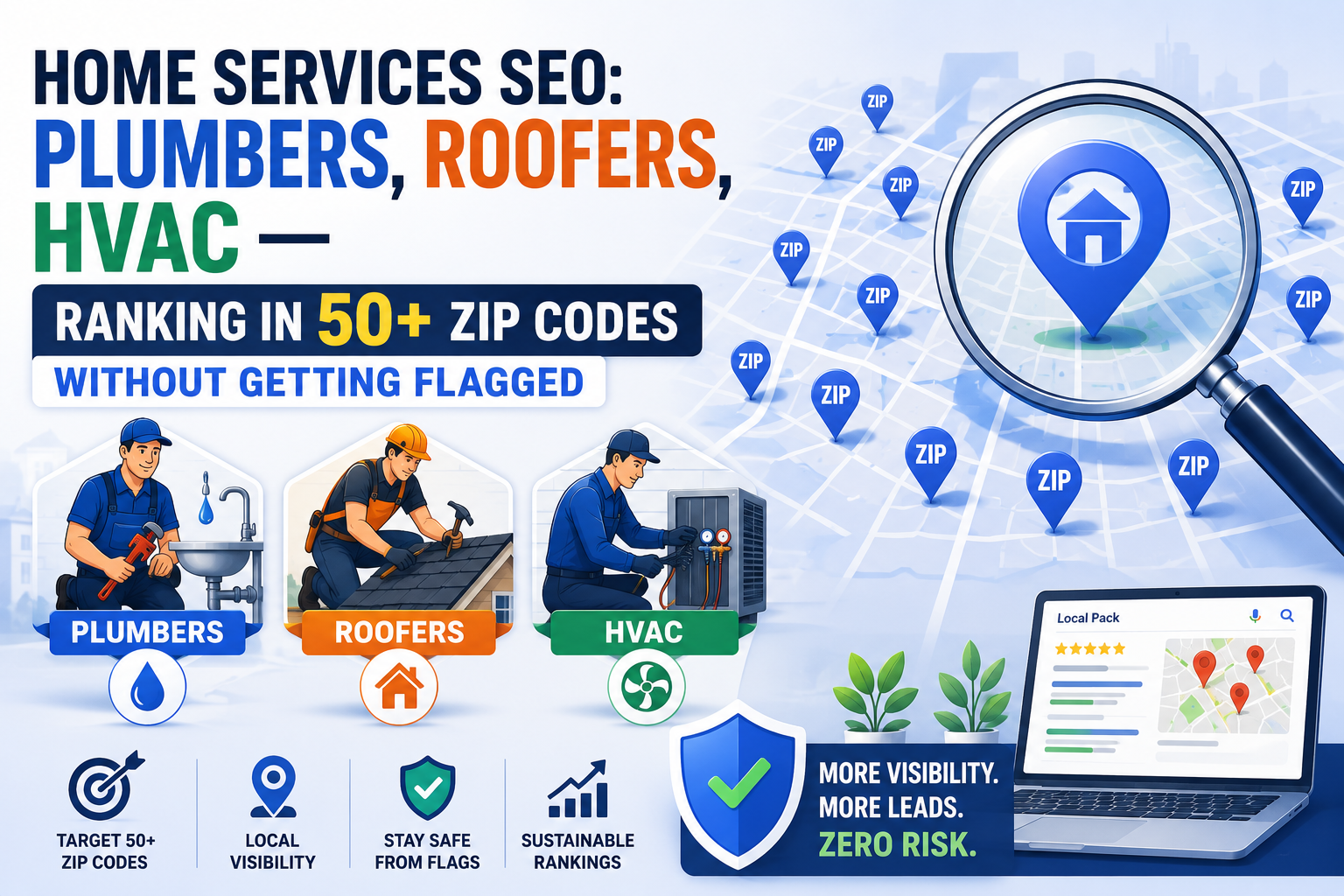
Local SEO is highly competitive for home service businesses. Whether you run a plumbing company, roofing business, HVAC service, electrical company, or landscaping business, appearing in local search results can directly impact the number of calls and enquiries you receive.
Many businesses expand beyond a single city and serve dozens of nearby areas. To attract customers across multiple locations, they often create separate pages for every ZIP code, suburb, or neighbourhood they serve.
While this strategy can be effective, it also carries significant risk. Creating hundreds of nearly identical location pages with only the city or ZIP code changed can lead to poor user experience and may reduce search visibility. Search engines aim to reward pages that provide genuine value rather than repetitive content created solely to rank.
This guide explains how home service businesses can build location specific content that helps customers while avoiding common SEO mistakes.
Why Multi Location SEO Matters
Most people searching for home services include a location in their query.
Examples include:
- Emergency plumber near me
- Roof repair in Dallas
- HVAC installation in Austin
- Water heater replacement in 75204
- Air conditioning repair nearby
Customers usually want someone who serves their local area quickly.
If your business operates across multiple cities or ZIP codes, location focused pages can help search engines understand where you provide services.
Why Businesses Create ZIP Code Pages
A single service area page often cannot address the needs of every location.
Businesses create individual pages to target:
- Cities
- Towns
- Neighbourhoods
- ZIP codes
- Service regions
When done well, these pages answer local questions and make it easier for customers to find relevant information.
The Problem With Duplicate Location Pages
A common mistake is creating dozens or hundreds of pages that are almost identical.
For example:
“We provide plumbing services in ZIP Code A.”
“We provide plumbing services in ZIP Code B.”
“We provide plumbing services in ZIP Code C.”
If only the location name changes, the pages provide little unique value.
This type of repetitive content may struggle to perform well because it does not meaningfully help users.
What Makes a Good Location Page?
Each location page should be useful on its own.
Include information such as:
- Services offered in that area
- Typical response times
- Local customer needs
- Service availability
- Common property types
- Seasonal issues
- Frequently asked questions
- Contact information
The page should answer questions that someone living in that specific location is likely to have.
Understand Local Differences
Different areas often have different service requirements.
For example:
Plumbers
Local pages may discuss:
- Hard water issues
- Older pipe systems
- Frozen pipes in colder regions
- Water pressure concerns
- Local building styles
Roofers
Location specific information may include:
- Storm damage
- High wind exposure
- Heavy snowfall
- Coastal weather
- Tile versus asphalt roofing trends
HVAC Companies
Useful local details could cover:
- Summer cooling demands
- Winter heating needs
- Humidity levels
- Indoor air quality
- Energy efficiency recommendations
These details make each page more relevant and genuinely helpful.
Create Unique Content for Every Area
Every location page should include original information.
Examples include:
- Local service challenges
- Area specific maintenance advice
- Customer success stories
- Local regulations when relevant
- Frequently requested services
- Community information related to your work
Avoid copying large sections of text between pages.
Showcase Local Experience
Customers trust businesses that demonstrate knowledge of their community.
Include examples such as:
- Years serving the area
- Local projects
- Common repair types
- Customer testimonials from nearby clients
- Before and after project summaries
Authentic local experience builds credibility.
Use Real Service Areas
Only create pages for places where you genuinely provide services.
Avoid targeting locations where you have no practical ability to serve customers.
Accurate service information improves customer satisfaction and supports long term SEO performance.
Optimise Titles Naturally
Instead of repeating keywords excessively, create titles that read naturally.
Examples include:
- Emergency Plumbing Services in North Phoenix
- Roof Repair Specialists Serving Downtown Orlando
- HVAC Installation for Homes in West Houston
Clear titles help both users and search engines understand the page.
Answer Local Questions
Location pages become more valuable when they answer questions customers frequently ask.
Examples include:
- Do you provide same day service?
- How quickly can a technician arrive?
- Which neighbourhoods do you cover?
- Do you offer emergency repairs?
- Are weekend appointments available?
Answering these questions improves usability.
Add Local Testimonials
Customer reviews from the area increase trust.
Testimonials should include genuine experiences related to:
- Service quality
- Response time
- Professionalism
- Completed work
Avoid inventing reviews or assigning testimonials to locations where the work was not performed.
Include Helpful Visual Content
Images improve engagement and support local relevance.
Consider including:
- Completed projects
- Service vehicles
- Local landmarks where appropriate
- Team members
- Before and after repairs
Use original photographs whenever possible.
Build a Strong Internal Linking Structure
Help visitors navigate between related pages.
For example:
- Plumbing services
- Drain cleaning
- Water heater installation
- Emergency plumbing
- Nearby service areas
Logical internal links improve navigation and help search engines discover your content.
Use Local Business Information Consistently
Ensure your business information remains consistent across your website.
Include:
- Business name
- Phone number
- Email address
- Service areas
- Business hours
Consistency helps customers and reduces confusion.
Avoid Creating Hundreds of Thin Pages
Quality is more important than quantity.
Instead of publishing hundreds of short pages, create fewer pages with detailed, useful information.
A comprehensive location page often performs better than many low value pages.
Keep Content Updated
Home service information changes over time.
Review pages regularly to update:
- Service availability
- Seasonal advice
- Business hours
- Contact details
- Customer reviews
- Project examples
Fresh content demonstrates that your business is active.
Mobile Experience Matters
Many customers search for home services from their phones during emergencies.
Ensure your pages:
- Load quickly
- Display correctly on mobile devices
- Include click to call functionality
- Make contact information easy to find
A smooth mobile experience improves both usability and conversions.
Build Local Authority Beyond Your Website
Location pages work best when supported by a broader local marketing strategy.
Focus on:
- Earning genuine customer reviews
- Maintaining an accurate business profile
- Participating in local community events
- Publishing helpful educational content
- Building relationships with reputable local organisations
Strong local authority supports long term visibility.
Common Mistakes to Avoid
Some practices reduce the effectiveness of location based SEO.
Examples include:
Copying the Same Page Repeatedly
Changing only the city or ZIP code creates repetitive content that offers little value.
Targeting Areas You Do Not Serve
Only create pages for genuine service locations.
Ignoring Local Information
Generic content does not help users understand your experience in a specific area.
Publishing Very Short Pages
Pages with minimal information often struggle to compete against comprehensive local resources.
Forgetting User Experience
Location pages should solve customer problems rather than simply repeat keywords.
Measuring Success
Evaluate your location pages using metrics such as:
- Organic traffic
- Local keyword rankings
- Phone calls
- Contact form submissions
- Direction requests
- Time spent on page
- Conversion rate
Success should be measured by customer engagement as well as search visibility.
The Future of Local SEO for Home Services
AI powered search experiences are placing greater emphasis on trustworthy, locally relevant information.
Businesses that consistently publish useful local content, demonstrate genuine expertise, and maintain accurate service information are better positioned to succeed as search continues to evolve.
Rather than creating pages simply to target more keywords, focus on becoming the most helpful resource for every community you serve.
Conclusion
Ranking across multiple ZIP codes is possible, but long term success depends on quality rather than volume. Home service businesses should create location pages that genuinely help customers by addressing local conditions, common service needs, response times, and practical advice.
Whether you operate a plumbing, roofing, HVAC, electrical, or other home service business, your location pages should demonstrate real local expertise instead of repeating the same content with different place names. By focusing on original, user centred information, consistent business details, and an excellent customer experience, you can improve your visibility across multiple service areas while building trust with both search engines and potential customers.
Frequently Asked Questions
Can I create a separate page for every ZIP code I serve?
Yes, provided each page offers unique, useful information for that location. Simply changing the ZIP code or city name while keeping the rest of the content identical is unlikely to provide value.
How can I make location pages unique?
Include area specific service information, local customer questions, project examples, testimonials, seasonal advice, and details relevant to that community.
Is it better to target cities or ZIP codes?
That depends on how customers search in your market. Some businesses benefit from city pages, while others may also create ZIP code pages where they can provide genuinely distinct local information.
Should every location page include the same list of services?
The core services can remain consistent, but explain how those services relate to the needs of that particular location instead of repeating identical descriptions.
Can I use customer reviews on location pages?
Yes, if they are genuine and accurately represent work completed in the relevant service area.
How long should a location page be?
There is no ideal word count. Focus on providing enough original information to answer local customer questions and explain your services clearly.
Does mobile optimisation matter for local SEO?
Yes. Many customers search for home services on mobile devices, especially during urgent situations. Fast loading pages and easy contact options improve the user experience.
Should I create pages for areas where I hope to expand?
It is generally better to create pages only for areas where you currently provide reliable service. Expanding your website as your service area grows helps keep information accurate.
What types of home service businesses benefit from multi location SEO?
Plumbers, roofers, HVAC contractors, electricians, landscapers, painters, pest control companies, cleaning services, locksmiths, garage door specialists, and many other service businesses can benefit from well developed location pages.
Is local SEO still important as AI search grows?
Yes. AI powered search still relies on high quality, trustworthy local information. Businesses that publish helpful location specific content and demonstrate real expertise are well positioned for both traditional search and AI driven discovery.